
Nomadic Exchange Reflection
Nomadic Exchange Reflection: Gete-Anishinaabeg, Rematriation, and Indigenous Relational Knowledge
Author: Mary Deleary, Ph.D.
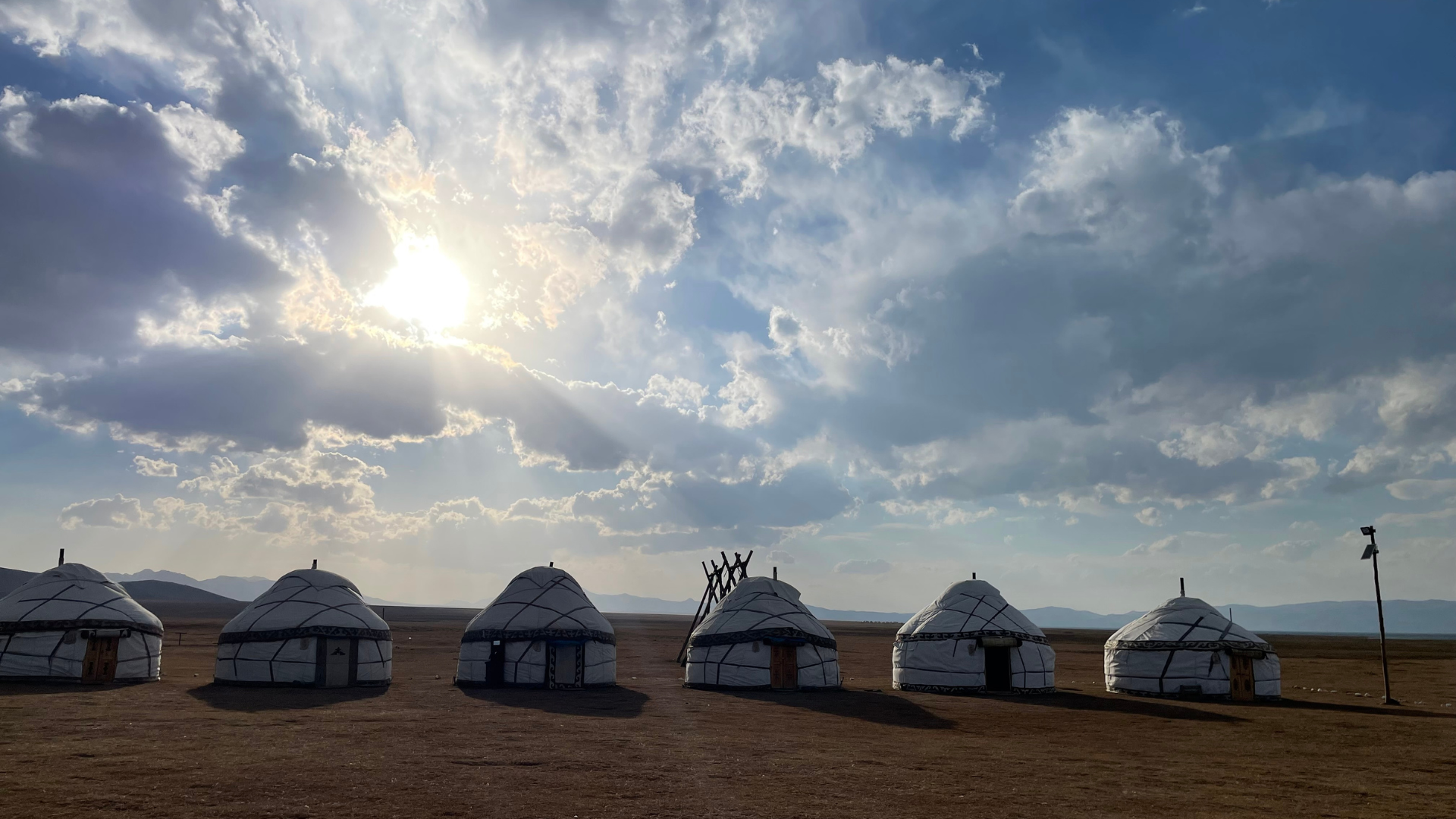
Song-Kul Lake, Kyrgyzstan.
I was drawn to participate in the 2025 Nomadic Exchange in Kyrgyzstan because it resonated deeply with my research and commitments to sustaining Indigenous knowledge systems and Indigenous-centered research frameworks. My work with Gete-Anishinaabeg, the old ones, centers on how ancestral belongings and cultural knowledge can be re-engaged through close looking, visiting, and fostering relationships grounded in care, accountability, and reciprocity. The exchange offered an opportunity to experience Indigenous ways of knowing that remain actively rooted in land, movement, and intergenerational practice rather than institutionalized frameworks. Learning on the land is the best kind of learning.
Traveling with my son shaped the experience in practical and joyful ways. It allowed me to witness learning as something embodied and relational. Throughout the Nomadic Exchange, learning occurred through observation, participation, taste, touch, smell, and shared presence rather than formal instruction. Having youth present reinforced the understanding that knowledge is carried collectively and renewed through relationships with our ancestors, the land, and living communities. Seeing my son welcomed into everyday activities affirmed the importance of creating spaces where Indigenous youth encounter culture as living, relational, and ongoing.
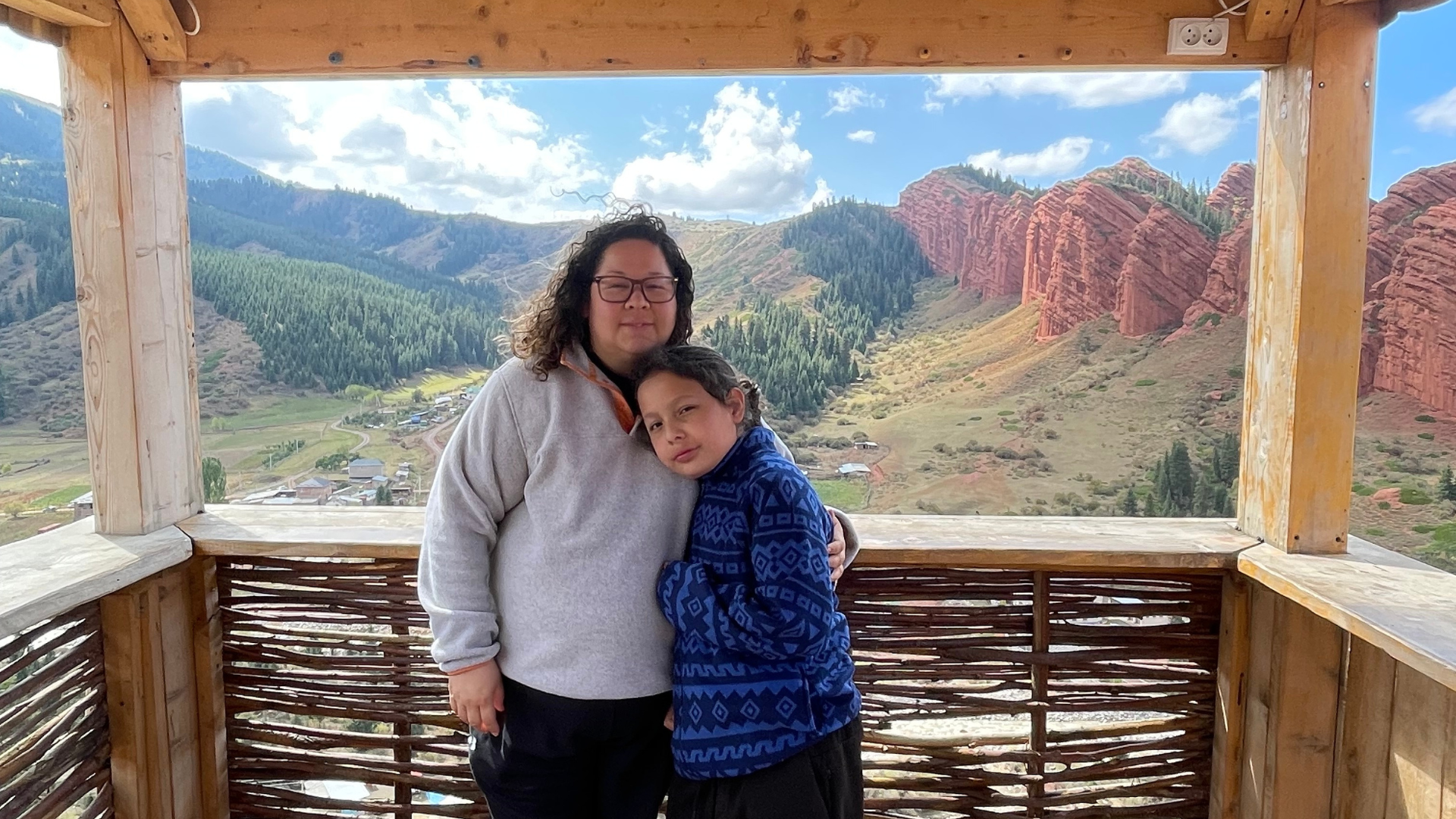
Author, Mary Deleary & her son, Locv, at Jeti Oguz, Kyrgyzstan.
My first impressions of Kyrgyzstan were shaped by a strong sense of continuity between land, life, and memory. The vast landscape and nomadic lifeways made visible how knowledge is sustained through movement, seasonal rhythms, and daily acts of making and care. Cultural knowledge and teachings were embedded in textiles, tools, family structures, and communal responsibilities. These practices resonated strongly with my family and community, where ancestral belongings are understood not as static objects, but as relatives who carry stories, teachings, and obligations that continue to shape the present.
Throughout the exchange, I noticed clear points of connection between the communities we encountered and my own home community. Elders were central, children were integrated into daily life, and learning unfolded through doing. These parallels reinforced that while Indigenous communities are shaped by distinct geographies and histories, we share foundational values rooted in relationality, responsibility, and respect. The experience reaffirmed for me that rematriation extends beyond the physical return of ancestral belongings; it also involves restoring relationships, responsibilities, and systems of care that colonial disruption sought to sever.
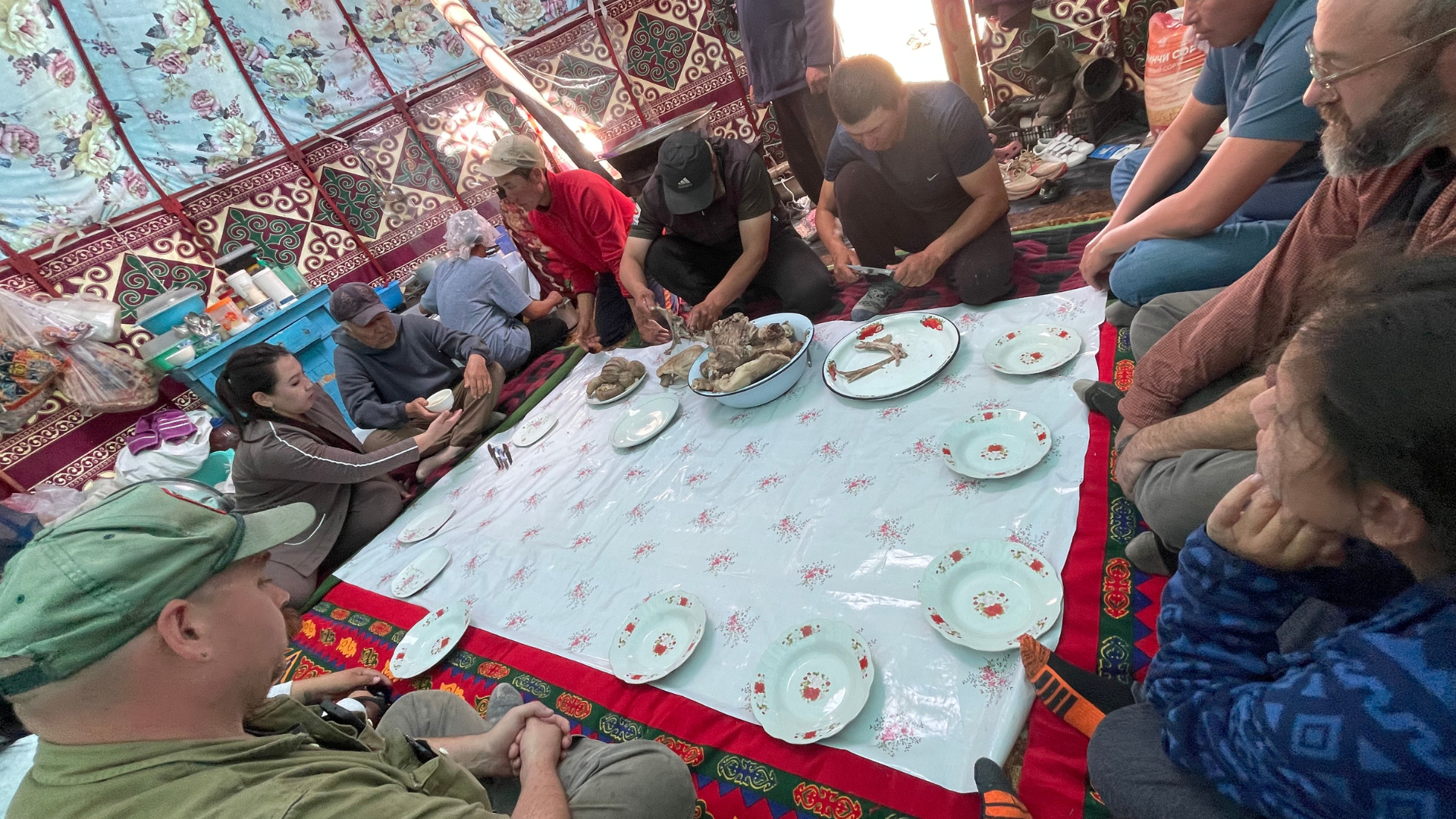
2025 Nomadic Exchange participants with host nomad family in Song-Kul region of Kyrgyzstan.
One of the most impactful aspects of the Nomadic Exchange was engaging with Indigenous knowledge in a global context and learning through presence rather than instruction. One experience that remains deeply ingrained in our memory was selecting and preparing a sheep for a shared meal with a family in Song-Kul. This moment was approached with care and intention and lots of planning beforehand. Before the butchering took place, members of the Nomadic Exchange group gathered to share personal stories about their own relationships to food, hunting, and sustenance within their communities. These conversations created space to acknowledge both the responsibility and the gravity of the task. We spoke openly about why this act was taking place and about our role as participants in an exchange rooted in respect and reciprocity. The process was framed as an act of care rather than consumption, emphasizing gratitude, accountability, and the understanding that nourishment comes through relationships with other living beings. For my son, this experience offered a powerful lesson in responsibility and respect.
Sharing this moment together reinforced the importance of preparing ourselves emotionally and spiritually before engaging in acts that sustain life. It also highlighted the ways Indigenous knowledge is carried through practice, storytelling, and collective reflection. In Song-Kul, the shared meal that followed was not simply about food but about the connections being made among families, across cultures, and across generations.
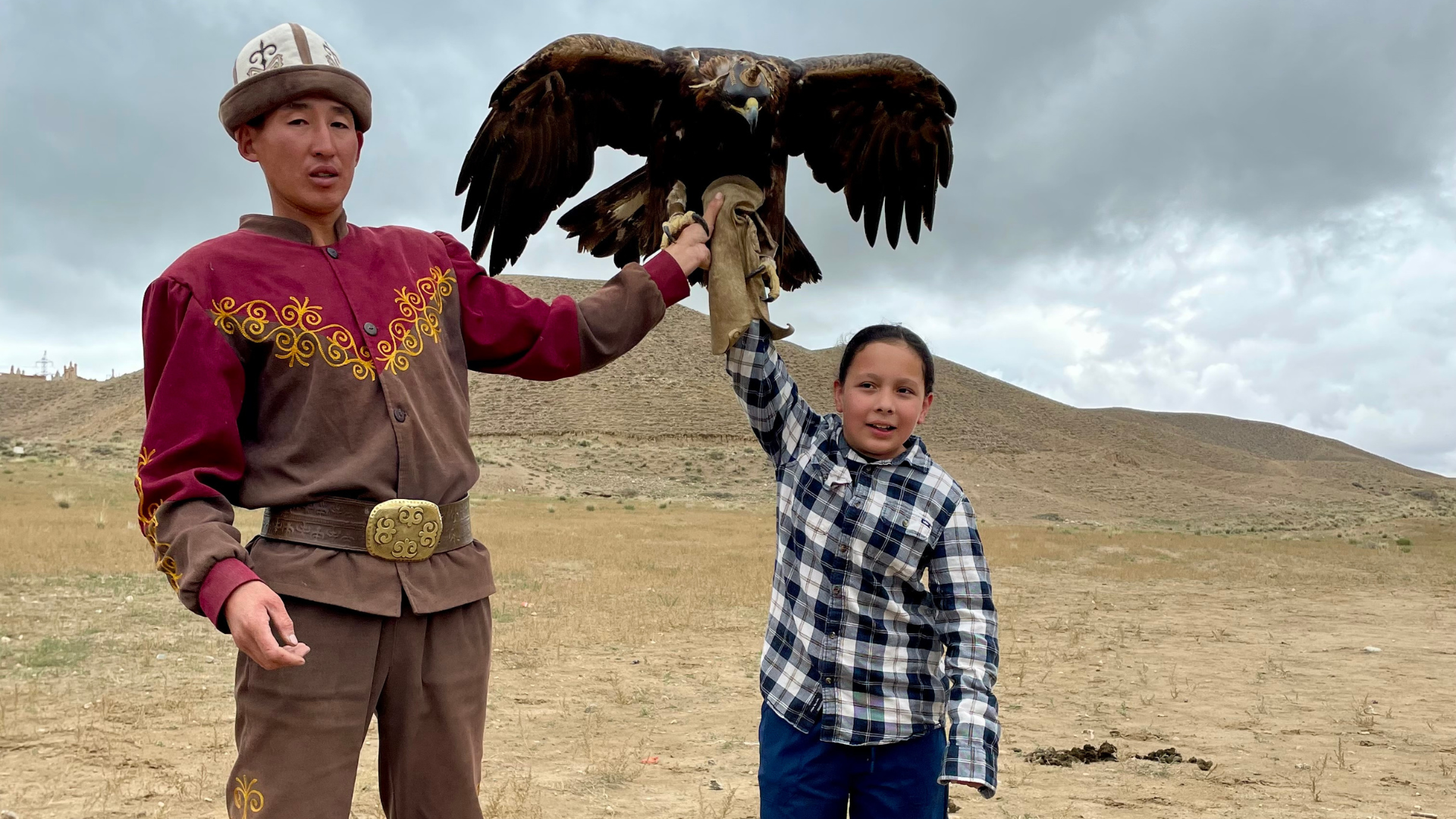
Locv with a Kyrgyz eagle hunter in Issyk-Kul, Kyrgyzstan.
Equally meaningful were moments spent with Kyrgyz artists and cultural practitioners as they shared their making practices and the stories embedded within them. These encounters mirrored my work in collections and archives, where engaging with ancestral belongings requires humility, patience, and attentiveness. Across cultures, making emerges as a form of remembrance that sustains relationships between past, present, and future generations. In this way, art is not separate from life, but integral to it.
The key lessons I am bringing home are slowness, attentiveness, and relational accountability. The Nomadic Exchange reaffirmed that meaningful engagement with Indigenous knowledge requires time and care, and it reinforced the importance of resisting extractive models of cultural exchange in favor of approaches grounded in reciprocity and long-term connection. These lessons directly inform my leadership at the IAIA Research Center for Contemporary Native Arts (RCCNA), where our mission is to unite art, artists, and archives. This work includes stewarding Indigenous knowledge, supporting students, artists, and scholars, and building community-centered research practices grounded in the same values that shaped the Nomadic Exchange. Witnessing how Kyrgyz communities sustain ancestral knowledge through land-based practice and intergenerational engagement reinforces my commitment to honoring artists and ancestors as living relations and to creating research environments where Indigenous knowledge systems are protected, activated, and sustained on our own terms.
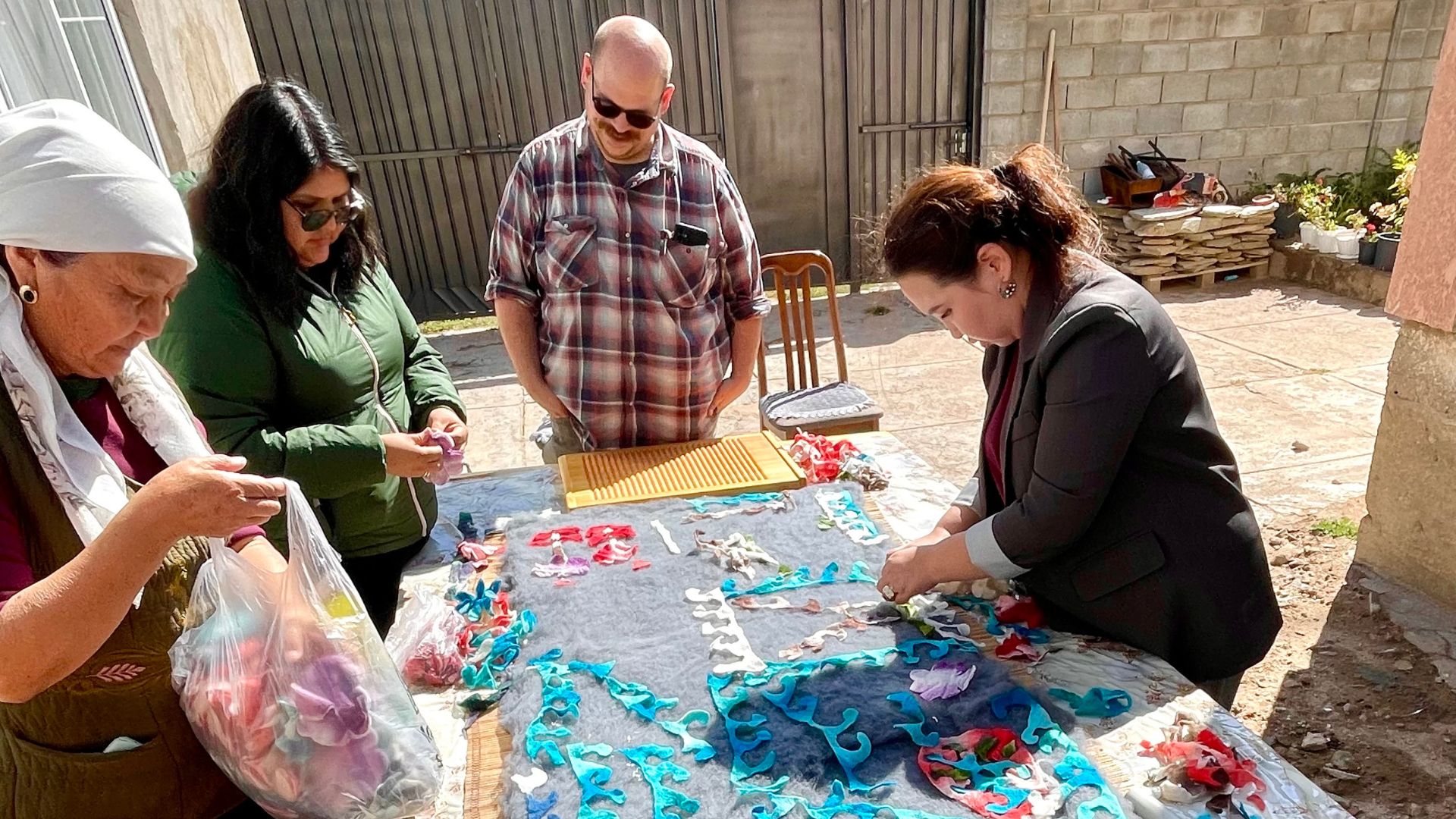
Learning felt-making techniques with traditional Kyrgyz felter. Pictured (L-R): Dakota Mace, Brian Fleetwood, Aqsungul Aytmuratova.
For other Native artists and cultural practitioners considering the Nomadic Exchange, I offer this guidance: approach the experience with openness, humility, and deep respect for the responsibilities that come with being welcomed into another Indigenous community. This is not an exchange rooted in taking, but in relationship-building. Our broader Indigenous community can support the ongoing exchange by committing to continued dialogue, collaboration, and reciprocity beyond the initial encounter. In doing so, we strengthen Indigenous futures grounded in care, connection, and shared responsibility. The Nomadic Exchange affirmed that Indigenous-to-Indigenous exchange, when guided by intention, is itself a powerful act of rematriation.
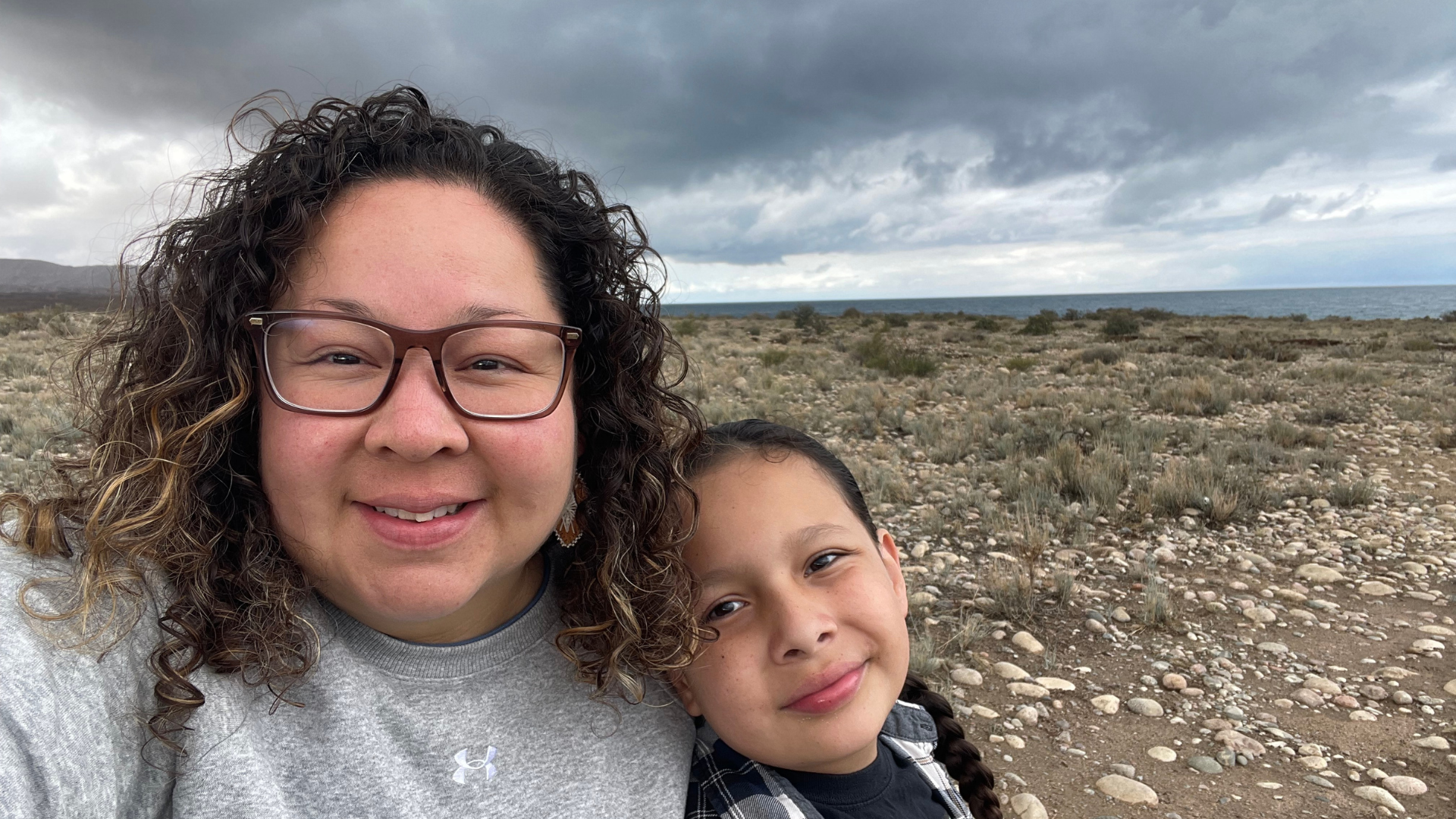
Mary Deleary and son, Locv.
