
The Language of Place
Craft, Memory, and Indigenous Futures at Zane Bennett Contemporary
Author: Heidi K. Brandow (Diné, Kanaka Maoli)
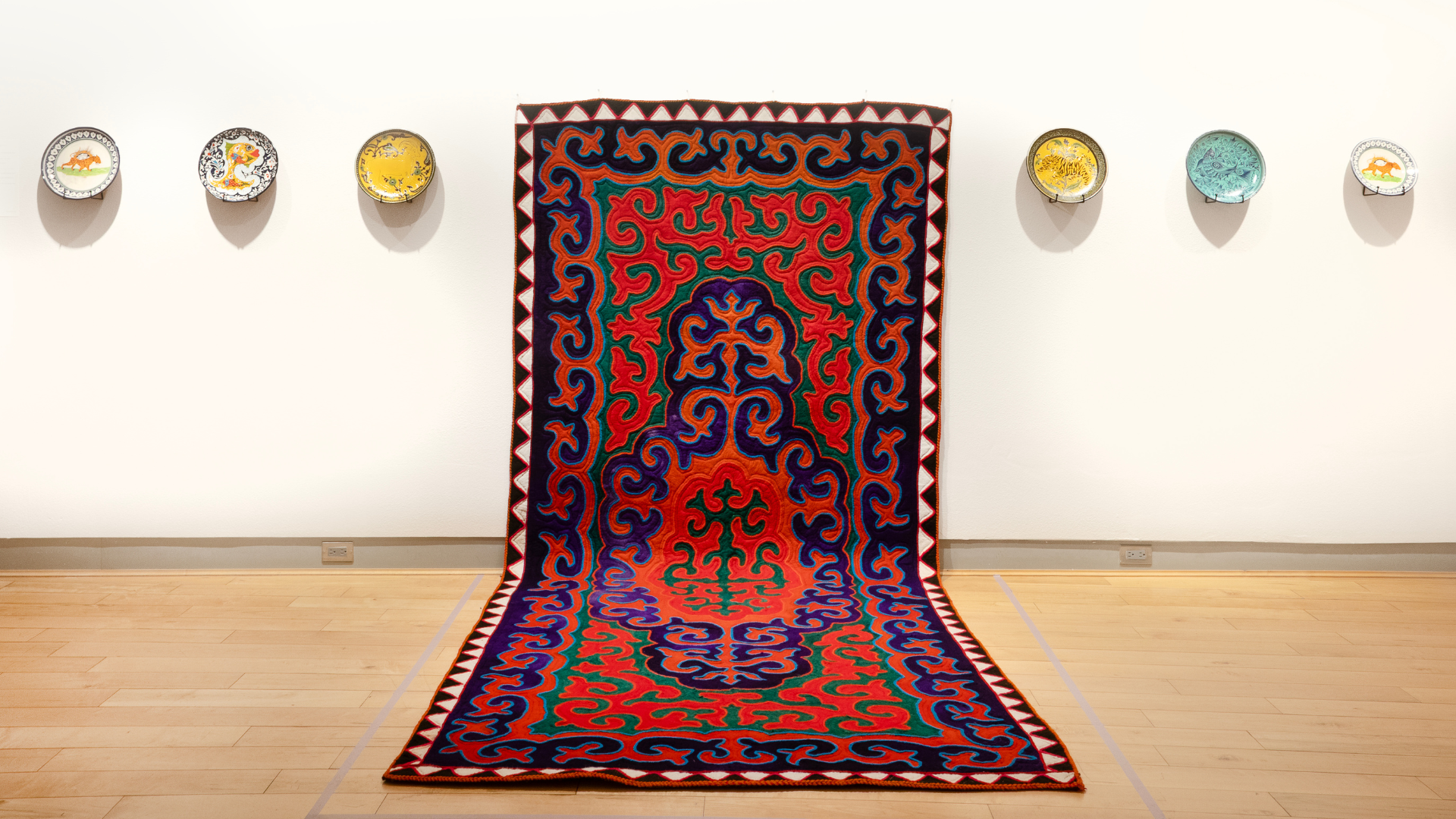
Collaborative installation piece by Shaarbek Amankul and Heidi K. Brandow
During the summer of 2025 at Zane Bennett Contemporary in Santa Fe, The Language of Place unfolded as a layered, transcontinental conversation, one grounded not in representation alone, but in process, relationship, and ethical attention to land. Bringing together Indigenous artists from North America and Central Asia, the exhibition proposed place as an active force: something performed, negotiated, and embodied rather than merely depicted.
At the heart of the exhibition was the collaborative practice of Heidi K. Brandow (Diné & Kānaka Maoli) and Shaarbek Amankul, whose joint work with artisans in Uzbekistan and Kyrgyzstan reframes craft as a critical terrain of memory, resistance, and survival. Rather than treating traditional practices as static heritage or folkloric citation, Brandow and Amankul approach clay, metal, felt, and textile as living languages, materials through which histories of colonization, ecological loss, gendered labor, and cultural marginalization are quietly reactivated.
Brandow and Amankul’s collaborations resist extractive models of artistic production. These works are not appropriations, nor illustrations of tradition, but acts of co-making and mutual unlearning. Time, care, and embedded knowledge replace speed and spectacle. Many of the works produced through this process remain in Central Asia, embedded in the communities and landscapes that shaped them. What appeared in Santa Fe were fragments, evidence of an ongoing, relational practice rather than a closed body of work.
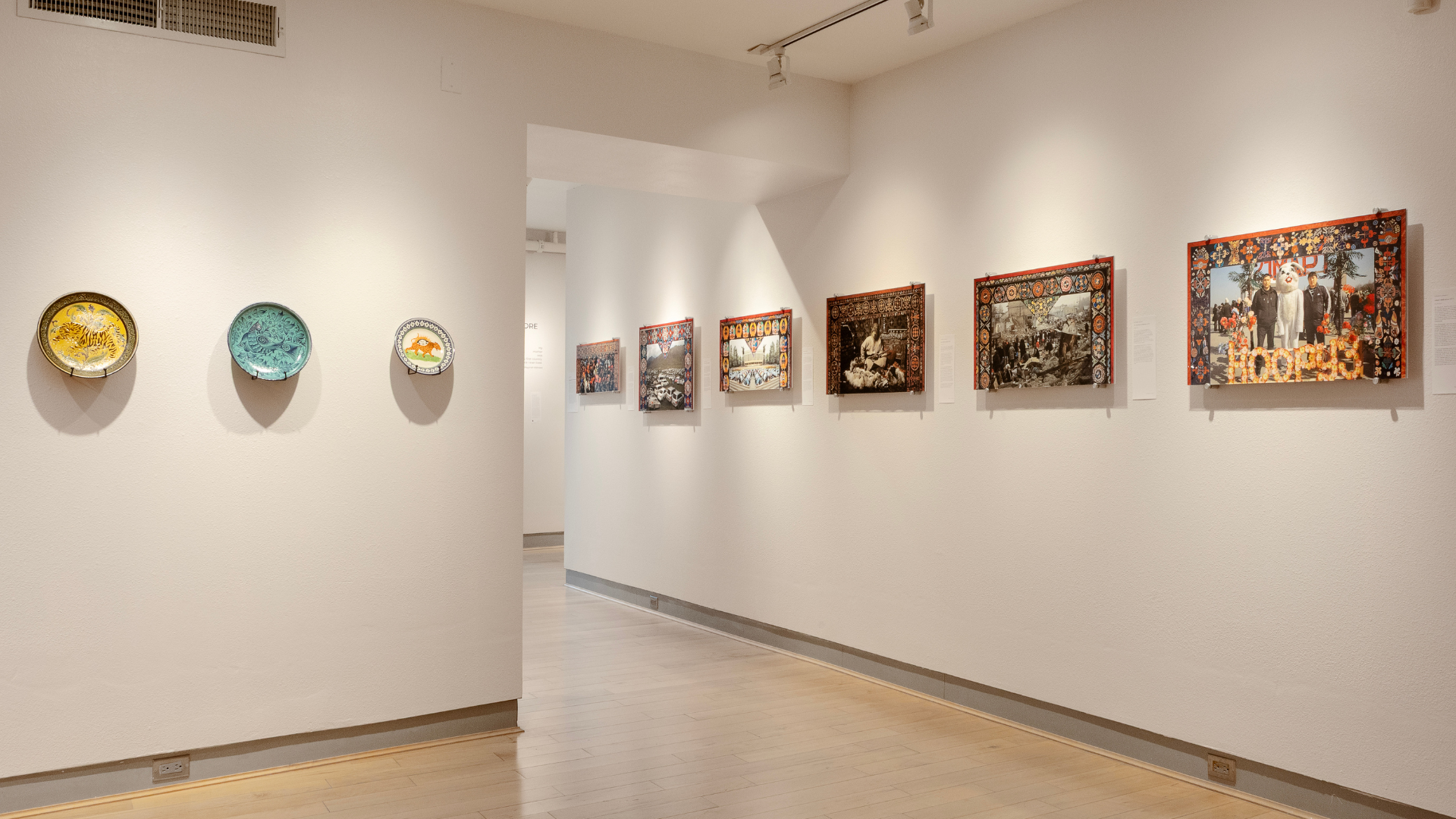
Collaborative ceramic pieces (left) and photos by Shaarbek Amankul line the hallway of the exhibition space
In partnership with ceramicists in Rishtan, Uzbekistan, Brandow and Amankul explored clay as ecological and mnemonic matter. Rather than illustrating endangered species, the ceramic works registered disappearance through fragility, surface, and restraint. Clay became a quiet archive of extinction, holding the tension between continuity and transformation, permanence and erosion.
A collaboration with a jeweler in the Fergana Valley reimagined ornament as cosmology. Using traditional metalwork techniques, the artists produced an experimental totem, an open-ended form that collapses boundaries between human, animal, and celestial realms. Here, ornament functioned not as adornment, but as a speculative bridge, linking the personal body to planetary systems.
In Kyrgyzstan, felt makers guided the artists toward tactility, ritual, and care. Felt, often associated with domestic, feminized labor, was treated as a sensory archive, absorbing gesture, climate, and time. These works resisted the gallery’s emphasis on visual dominance, instead inviting slowness, proximity, and embodied engagement.
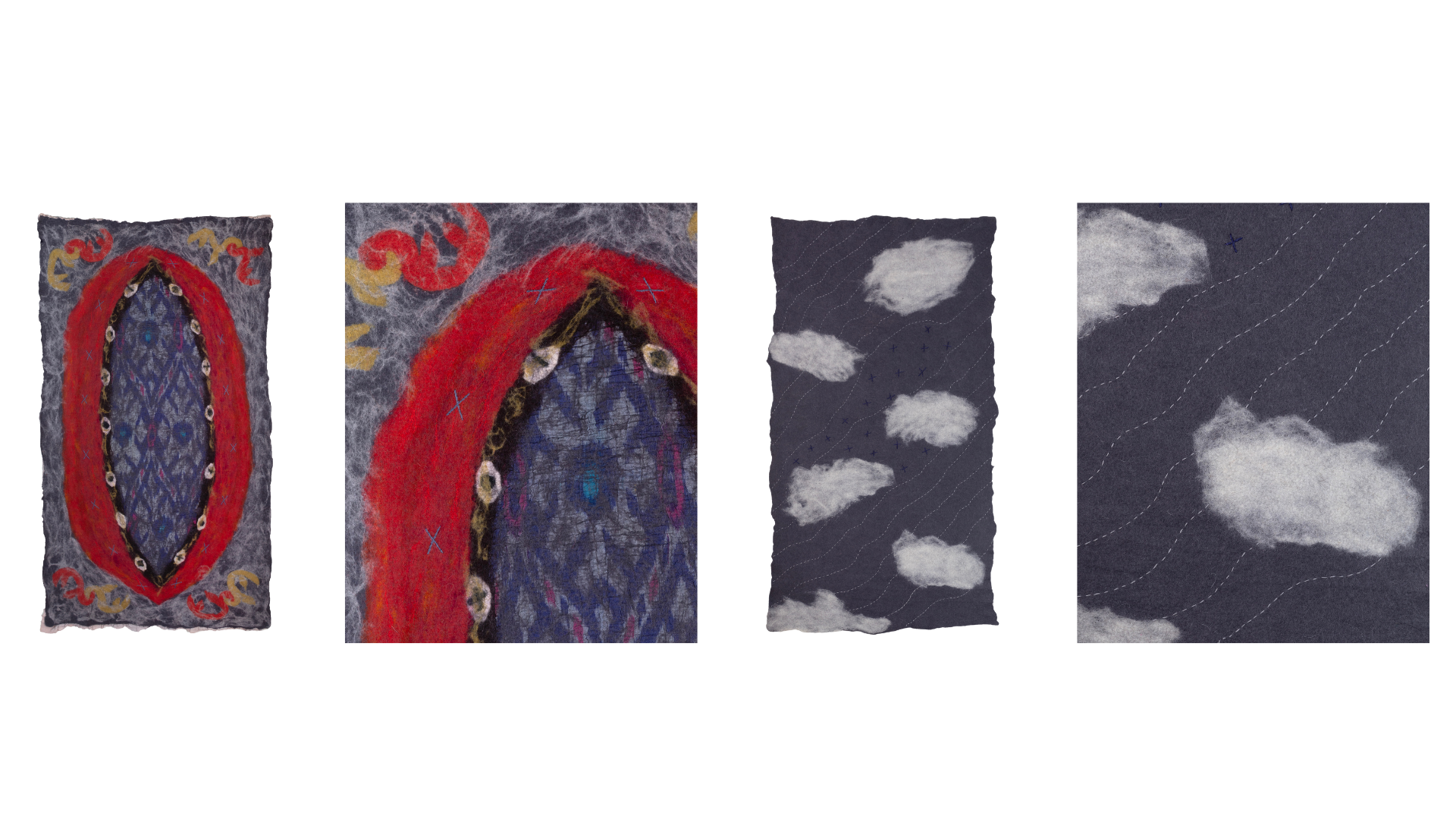
Felt pieces by Shaarbek Amankul (left) and Heidi K. Brandow (right)
Rather than reconciling contemporary art with traditional craft, Brandow and Amankul cultivated a productive friction between global art systems and local epistemologies; between aesthetic autonomy and lived function; between the ethics of transmission and the politics of disappearance. Their work asks difficult questions: Who is entitled to speak through a place? What materials are granted authority, and which are silenced?
This ethos extended throughout The Language of Place, which also featured works by Tom Jones (Ho-Chunk) and Clementine Bordeaux. Jones’s photographic and installation works critically confronted colonial representations of Indigenous people while affirming the vitality of Ho-Chunk presence and land-based identity. Bordeaux’s conceptual and performative works drew from Lakota philosophies, examining storytelling, memory, and cultural resilience as living, communal acts.
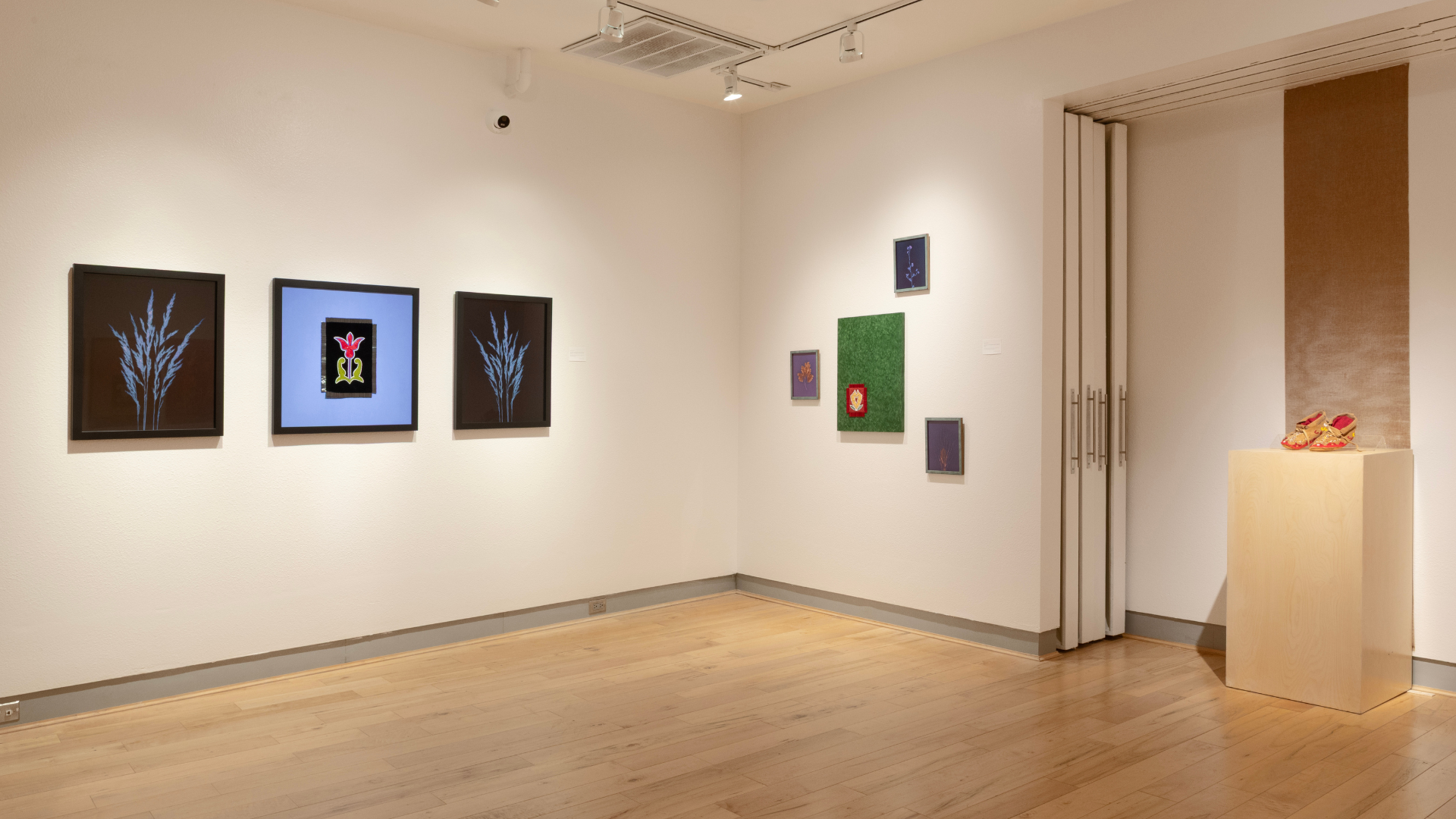
Artwork by Tom Jones (Ho-Chunk) and Clementine Bordeaux (Sicangu Lakota)
Across painting, photography, mixed media, and installation, the exhibition foregrounded Indigenous knowledge as a driver of innovation rather than a relic of the past. The Language of Place situated land as both archive and catalyst, shaping cultural resilience, sustaining sovereignty, and imagining Indigenous-led futures beyond colonial frameworks.
Ultimately, the exhibition did not offer resolution. It offered relation. What visitors encountered at Zane Bennett Contemporary was not a definitive statement but an invitation to an ongoing dialogue, one in which the land continues to speak through materials, gestures, and shared responsibility.
